Environmental Approval for the OPAL Nuclear Research Reactor
ANSTO
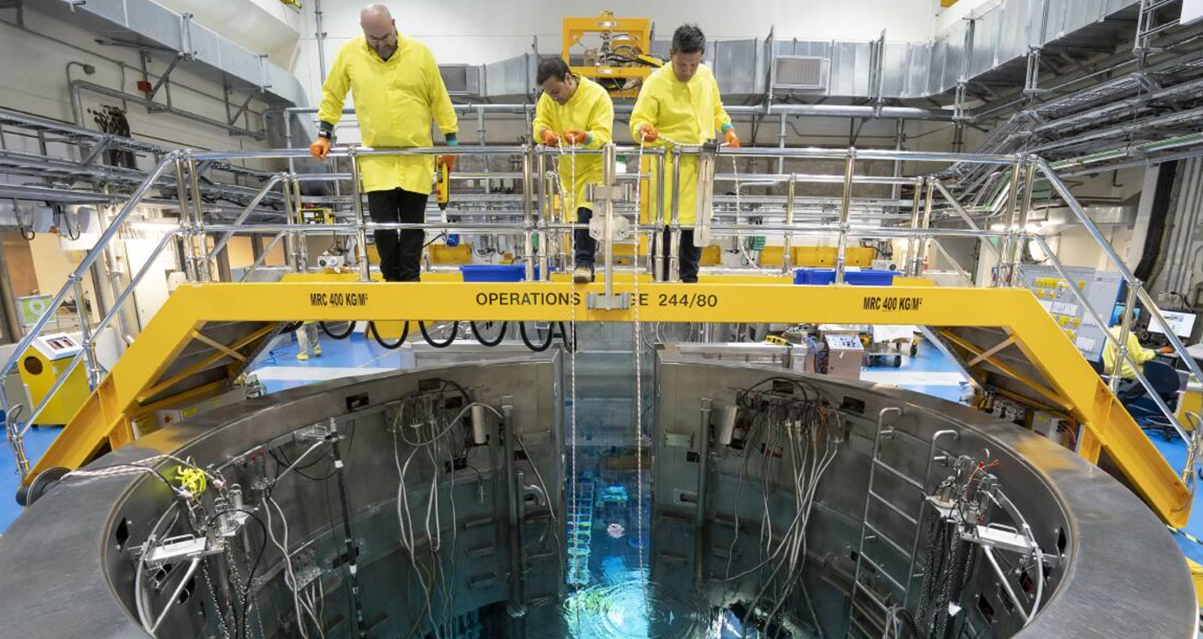
Delivered the Environmental Impact Statement (EIS) that secured Federal approval for ANSTO’s $300 million OPAL replacement nuclear reactor — one of Australia’s most scrutinised scientific infrastructure projects.
Situation
ANSTO needed Commonwealth environmental approval for a new nuclear research reactor at Lucas Heights — a project of national significance, global regulatory complexity, and intense public attention.
The approval pathway fell under the Environment Protection (Impact of Proposals) Act 1974, requiring transparent process, peer review, and broad public engagement.
The scale of scrutiny was immense: 935 public submissions, concerns across safety, environmental impact, toxicology, and long-term waste management — all of which needed to be addressed in a scientifically rigorous, publicly defensible way.
Role
David was the Project Manager and principal author of the final Environmental Impact Statement — the core document that would determine whether the reactor could proceed.
His chemical engineering background was critical in navigating nuclear safety standards, environmental science, and the regulatory intricacies of a project with national and international implications.
Key steps
As Project Manager, David led and coordinated a wide suite of technical, environmental, and toxicological studies that underpinned the project’s approval case, including:
Directed multidisciplinary engineering, environmental, and scientific workstreams to meet international nuclear safety benchmarks.
Oversaw the integration of toxicology, radiation, waste, and ecological impact assessments into a single coherent statutory narrative.
Authored the final EIS — the document that synthesised all technical, environmental, regulatory, and public submissions into a defensible case for approval.
Designed and managed the public consultation response process, addressing 935 submissions and community concerns with transparency and scientific clarity.
Ensured the EIS met all requirements for peer review, public exhibition, and Federal assessment.
Outcome
The project received Federal environmental approval, enabling ANSTO to proceed with what became the OPAL reactor — a facility that has since become central to Australia’s nuclear medicine, materials research, and scientific capability.
The approved EIS:
Confirmed environmental impacts were acceptable with appropriate management measures.
Demonstrated alignment with international nuclear safety standards.
Provided the regulatory foundation for construction of the $300 million reactor delivered in 2007.